




You probably don’t think about your gums very often—until something looks or feels different. Maybe they seem a little redder than usual, or you’ve noticed a darker patch that wasn’t there before. It’s easy to brush it off at first, but changes in your gums can be your body’s quiet way of asking for attention.
Your gums are more than just the foundation for your teeth—they’re a window into your overall oral health. When their color starts to shift, it often points to inflammation, irritation, or even infection developing beneath the surface.
Many people begin searching for a periodontist near me after noticing these changes. That instinct is important. Paying attention early can help you avoid more serious issues later on.
What Healthy Gums Typically Look Like
Healthy gums don’t have to be perfectly pink to be considered normal. Their appearance can vary depending on your natural pigmentation.
In general, healthy gums are:
- Firm and snug around your teeth
- Free from swelling or puffiness
- Even in tone (whether light pink, coral, or naturally darker)
- Not prone to bleeding
The key thing to watch for isn’t the exact color—it’s any change from what’s normal for you.
Why Gum Color Changes Happen During Disease
When your gums change color, there’s usually a reason behind it. Most of the time, it comes down to inflammation or bacterial buildup along the gumline.
These are common periodontal symptoms, and they tend to show up gradually.
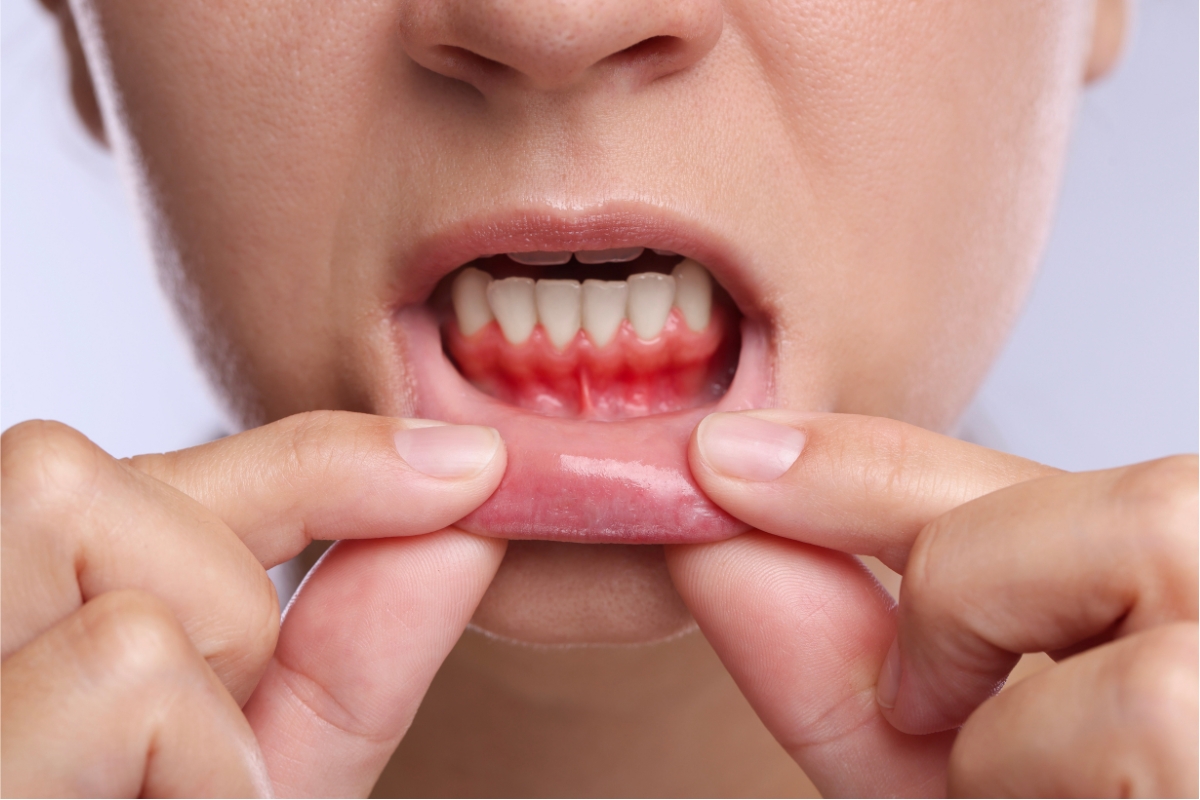
Red or Inflamed Gums
One of the earliest signs of a problem is redness.
If plaque sits along your gumline for too long, your body reacts by sending more blood to the area. This can make your gums:
- Look bright red
- Feel tender
- Bleed when brushing or flossing
At this stage, the condition is often gingivitis, which is still reversible with proper care.
Dark Red or Purplish Gums
If the issue isn’t addressed, the color may deepen over time.
Gums may start to look:
- Dark red
- Slightly purple
- More swollen than before
This shift often signals that inflammation has progressed and may be affecting deeper tissues.
Pale or Whitish Gums
Sometimes, instead of getting darker, gums may look unusually pale.
This can happen when:
- Blood flow is reduced
- Tissue health is compromised
- Infection begins to affect circulation
It’s less common, but it’s still something that shouldn’t be ignored.
Brown or Black Areas
Not all darker areas are a cause for concern—some people naturally have more pigmentation. But if you notice new spots or uneven discoloration, it could be linked to:
- Smoking or tobacco use
- Certain medications
- Tissue damage or infection
A periodontist can help determine what’s normal and what needs attention.
How Infection Affects Gum Color
When bacteria build up under your gums, your immune system steps in to fight back. This response is what causes visible changes like redness, swelling, and discoloration.
Gum disease is more common than many people realize. According to the American Dental Association, nearly half of adults over 30 show signs of periodontal disease.
That’s why even small changes in your gums are worth paying attention to—they’re often early warning signs.
Other Signs That May Come Along With Color Changes
Gum color changes usually don’t happen alone. You might also notice:
- Bleeding when brushing or flossing
- Persistent bad breath
- Gums pulling away from teeth
- Sensitivity near the gumline
- A feeling that teeth are slightly loose
These symptoms can develop slowly, which is why they’re easy to overlook at first.
A Closer Look at Gum Disease Progression
Gum disease tends to move in stages, and the earlier it’s caught, the easier it is to manage.
Early Stage: Gingivitis
- Mild redness and swelling
- Occasional bleeding
- No lasting damage yet
Moderate Stage
- More noticeable discoloration
- Gum pockets forming around teeth
- Early bone involvement
Advanced Stage
- Dark, uneven gum color
- Gum recession
- Tooth instability
This progression doesn’t happen overnight, but without care, it can lead to long-term damage.
Local Perspective: Wheat Ridge, CO
In Wheat Ridge, CO, everyday habits and environmental factors can play a role in gum health. Dry air, diet choices, and tobacco use can all contribute to gum irritation over time.
Many people don’t seek care until discomfort becomes noticeable, but gum color changes often appear well before pain. Seeing a periodontist early can help you avoid more complex treatments later.
When It’s Time to See a Periodontist
It’s not always easy to know when to act, but some signs are worth taking seriously.
You may want to see a periodontist if you notice:
- Redness that doesn’t go away
- New or unusual discoloration
- Bleeding that continues despite good hygiene
- Signs of infection like swelling or tenderness
If you’ve been thinking about finding a periodontist near me, it’s usually for a reason—and it’s better to check sooner rather than later.
Simple Ways to Support Healthy Gums
Good daily habits can go a long way in keeping your gums healthy and preventing gum color changes.
Here are a few things that help:
- Brush gently twice a day
- Floss daily to remove buildup between teeth
- Drink enough water throughout the day
- Avoid tobacco products
- Keep up with regular dental visits
Small, consistent steps can make a noticeable difference over time.
FAQs About Gum Color Changes
Are red gums always a sign of disease?
Not always, but persistent redness is often linked to inflammation and should be checked if it doesn’t improve.
Can gum color return to normal?
Yes, in early stages like gingivitis, gums can return to a healthier color with proper care.
Is discoloration always painful?
No. Many forms of gum disease develop without pain, which is why visual changes matter.
Should I worry about naturally dark gums?
No, natural pigmentation is normal. Concern arises when there are sudden or uneven changes.
How quickly does gum disease develop?
It usually develops gradually, but without treatment, it can worsen over time.
Final Thoughts
Your gums don’t change color randomly. Whether it’s a subtle redness or more noticeable discoloration, these changes are often your body’s way of signaling that something needs attention.
Listening to those signs early can help you avoid more complicated issues down the road. If something feels off or looks different than usual, it’s worth getting it checked. Taking that step now can help protect your oral health in the long run—so it may be a good time to schedule an appointment and get clarity on what your gums are trying to tell you.